
Have you ever been awakened in the middle of the night by severe knee or hip pain?
I have.

I enjoy staying active. Whether I’m gardening, walking, or working on projects around the house, I like to keep moving. But I also have arthritis in both knees, and lately I’ve been waking up in significant pain that makes it difficult to get comfortable enough to fall back asleep.
That led me to ask a question many of us have probably wondered:
Why do our knees and hips seem to hurt more at night?
Why Nighttime Pain Feels Worse
While pain doesn’t necessarily become worse after the sun goes down, it often becomes more noticeable for several reasons:
- We stop moving. During the day, our joints stay lubricated through movement. Once we lie still for hours, stiffness can increase.
- The day’s activities catch up with us. Walking, exercising, gardening, standing, or simply being active can leave joints and muscles feeling inflamed by bedtime.
- There are fewer distractions. During the day, we’re focused on work, family, and daily life. At night, our attention shifts to the discomfort.
- Sleep position matters. Poor alignment while sleeping can place additional stress on the hips, knees, and lower back.
The good news is that a few simple changes may help you sleep more comfortably.
Simple Ways to Relieve Nighttime Knee and Hip Pain
Support Your Knees and Hips 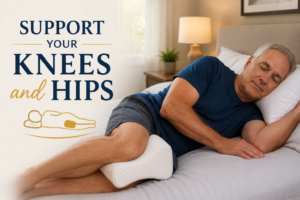
If you sleep on your side, placing a supportive pillow between your knees may help keep your hips, pelvis, and spine better aligned while reducing pressure on your joints. Take a look at the selections in Best Sleep Essentials
If you sleep on your back, placing a pillow beneath your knees creates a slight bend that may reduce stress on your lower back and knees.
I’ve slept with a regular pillow between my knees for years, but it had become flat and wasn’t providing the support I needed. After researching different options, I decided to try a knee pillow designed specifically to maintain better alignment while sleeping. Take a look at the selections in Best Sleep Essentials.
A Travel-Friendly Solution
One thing I hadn’t really solved was travel. I want the same knee and hip support when I’m away from home, but packing a full-size pillow takes up valuable suitcase space.
Since I’ll be traveling quite a bit over the next couple of months, I just ordered an inflatable travel knee pillow. It packs down into a small travel pouch and can be inflated when I’m ready to sleep.
I haven’t used it yet, so I’ll report back after I’ve traveled with it. But I like the idea of having a portable ProAge Smart Solution that may help me maintain the same sleep routine away from home without taking up half my suitcase.
Explore the Inflatable Travel Knee Pillow:
View the pillow on Amazon
Don’t Forget Your Head and Neck
A supportive pillow for your head and neck is just as important. Proper alignment starts at the top of your spine. When your head, neck, shoulders, hips, and knees are better supported, your entire body can rest more comfortably. See selections in Best Sleep Essentials.
Stretch Before Bed
Gentle stretching before bedtime may help loosen tight muscles and reduce stiffness after a busy day. Take a loo at me YouTube play list with bedtime stretches.
Apply Gentle Heat
A warm bath, warm shower, or heating pad before bed may help relax muscles and ease discomfort.
Keep Moving During the Day
Regular physical activity helps maintain joint flexibility and muscle strength. Just remember that recovery is every bit as important as activity.
🌙 Explore My Best Sleep Essentials Collection
 After learning how important proper sleep alignment can be, I decided it was time to replace my old pillow. Although I’d been using a regular pillow between my knees for years, it had become flat and no longer provided the support my knees and hips needed.
I chose a supportive leg pillow designed to help keep the hips, pelvis, and spine better aligned while sleeping. My hope is that it will reduce pressure on my joints and help me sleep more comfortably through the night.
While researching, I also found several other highly rated products that support better sleep. To make shopping easier, I created my Best Sleep Essentials Collection, where you’ll find supportive pillows, sleep accessories, and other products I’ve carefully selected to help you sleep more comfortably and wake up feeling your best.
Whether you’re dealing with arthritis, everyday aches and pains, or simply want a better night’s sleep, I hope these resources help you find the comfort you’re looking for.
When to Talk With Your Healthcare Provider
Occasional soreness after an active day is common, but persistent or worsening nighttime pain shouldn’t be ignored. If your pain is new, severe, doesn’t improve, or is accompanied by swelling, redness, warmth, fever, or follows an injury, it’s important to contact your healthcare provider for an evaluation. They can help determine the underlying cause and recommend the most appropriate treatment.
Living the ProAge Smart Life™
Living the ProAge Smart Life™ doesn’t mean pretending aches and pains don’t exist. It means making smart, proactive choices that help us continue doing the things we love.Here’s to sleeping well… and living your best life, even while you sleep. 🌻
P.S.
(As an Amazon Associate, I earn from qualifying purchases at no additional cost to you.)