
 I’ve been using a collagen supplement to help with my arthritis, but recently I started looking more closely at the different collagen products available.
What I discovered surprised me:
Not all collagen supplements are created equal.
There are different types of collagen, different sources, different amounts per serving and different ways collagen is processed. That prompted me to take another look at what I was using — and search for better options.
Why Collagen for Arthritis?
Collagen is one of the major proteins in our bodies. It provides structure to our skin, bones, tendons, ligaments and cartilage — the tissue that helps cushion our joints.
As we get older, our bodies naturally produce less collagen.
For those of us dealing with arthritis and joint discomfort, that raises an interesting question:
Can taking collagen help with joint pain?
Research is particularly encouraging for osteoarthritis, the most common form of arthritis.
A 2024 analysis of 35 randomized controlled trials involving more than 3,000 people found that collagen derivatives produced small-to-moderate improvements in osteoarthritis pain and function.
Another review of 11 randomized trials involving people with knee osteoarthritis found improvements in both pain and function among those taking collagen supplements.
Collagen isn’t a cure for arthritis, but the research suggests it may be a useful addition for some people managing osteoarthritis.
Not All Collagen Is the Same
This is where my research became especially interesting.
There are many collagen supplements on the market, but they aren’t necessarily interchangeable.
Hydrolyzed collagen peptides have been broken into smaller pieces, making them easier to dissolve and use in powders and beverages. There is also undenatured Type II collagen (UC-II), which has been specifically studied for joint health.
That’s why I think it’s important to look beyond the word “collagen” on the front of the package.
Look at the type, source, amount per serving, ingredients and quality of the product you’re actually buying.
Two Collagen Options I Found
After researching better options, I added Sports Research® Collagen 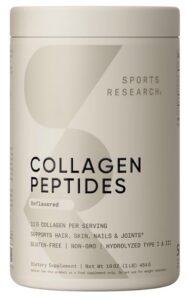 Peptides and Vital Proteins Collagen Peptides to my Best Healthy Choices Collection.
Sports Research® Collagen Peptides
Sports Research CollagenSports Research Collagen is an unflavored hydrolyzed bovine collagen peptide powder containing Types I and III collagen.
What I especially like is its simplicity. It can easily be mixed into coffee, smoothies or other drinks, making it an easy addition to an existing routine.
Shop Sports Research Collagen Peptides
Vital Proteins Collagen Peptides
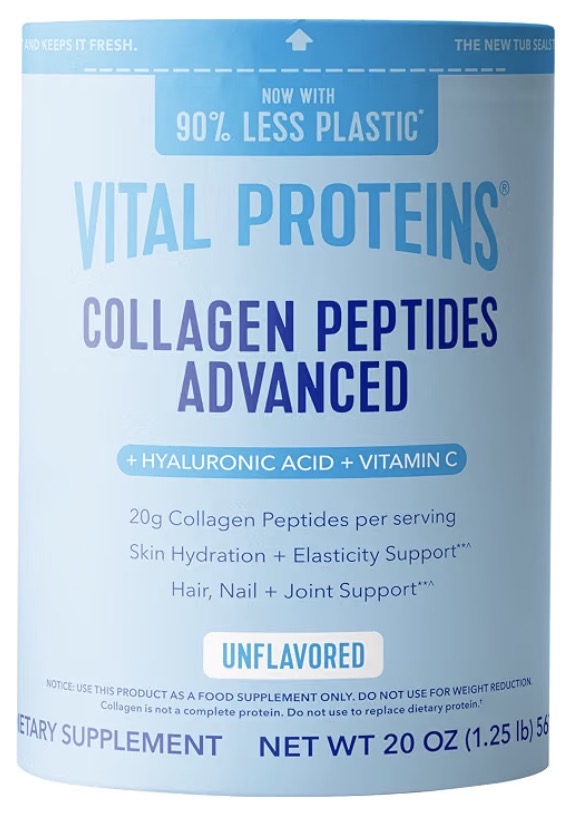 Vital ProteinsVital Proteins is another widely known hydrolyzed bovine collagen option and can also easily be added to coffee, smoothies and other foods or beverages.
Having choices matters because the best supplement isn’t necessarily the same for everyone.
A ProAge Smart Solution
For me, taking collagen isn’t about wrinkles and trying to look younger. It’s about supporting my joints and staying active so I can feel better and continue doing the things I enjoy.
It’s about being proactive about aging and looking for smarter ways to support my body so I can continue doing the things I enjoy.
Collagen is only one piece of that picture. Movement, exercise, good nutrition, maintaining a healthy weight and protecting our joints remain important parts of managing osteoarthritis.
And supplements should never replace appropriate medical care. If you have arthritis, take medications or have other health conditions, talk with your healthcare professional before adding a supplement.
But I believe there’s tremendous value in continuing to learn, asking questions and finding better options.
That’s what ProAge Smart Solutions are all about — finding smarter ways to help you continue doing the things you love.
Choose to be a ProAger, not an Old Ager.
Use ProAge Smart Solutions to Live Your Best Life.

As an Amazon Associate, I may earn from qualifying purchases.